The Finnish education system is internationally recognized for its balanced approach, and many researchers argue that the Finnish education system succeeds because it prioritizes emotional well-being as much as academics. Unlike exam-oriented frameworks, the Finnish education system focuses on building confident, curious learners. For families comparing global schooling options, the Finnish education system stands out as a model based on trust, equality, and calm learning environments.
Key Details
| Category | Information |
|---|---|
| Focus Keyword | Finnish education system |
| Framework | CPEQ (Oppotify Original Model) |
| Audience | Parents, educators, policymakers, global students |
| Website | https://oppotify.com |
Table of Contents
1. Overview
The Finnish education system is known for:
- No national exams until age 16
- Minimal homework
- Shorter school days
- Highly qualified teachers
- Equal access for all students
- Nearly zero private tutoring
And yet…
🇫🇮 Finland consistently ranks among the world’s most successful school systems in well-being, literacy, equality and long-term life outcomes.
Finland proves that success in education is not about pressure — it is about environment.
2. The 7 Quiet Power Principles (CPEQ Framework)
(Oppotify Original)
Finland’s system is built around seven interlocking principles:
⭐ 1) Culture of Trust
Unlike most countries, Finland does not supervise teachers with heavy control.
- No classroom cameras
- No standardized test ranking
- No principal micromanagement
Teachers are trusted as experts. Students are trusted as responsible learners. Parents trust schools.
Trust is the foundation.
⭐ 2) Pedagogy That Follows the Child’s Rhythm
Finland rejects the idea of “one speed fits all.”
- Short lessons
- Long breaks
- Nature-based learning
- Hands-on exploration
- Play as a learning tool
- Mixed-ability classrooms
Learning slows down to match the child — not the other way around.
⭐ 3) Equity as a Structural Policy, Not a Slogan
In Finland, equity is not a message — it is a design rule.
- All schools have equal funding
- All teachers have equal training
- All students get free meals, books, support
- No elite vs poor schools
Your postal code does not determine your future.
⭐ 4) Quiet Leadership in Schools
Finnish school leaders follow a “silent influence” philosophy:
- Calm tone
- Low conflict
- Minimal hierarchy
- Collaborative culture
This is the opposite of high-tension school management found in many countries.
⭐ 5) Well-Being as an Academic Strategy
Finland sees mental health as a learning tool.
- Less stress → better memory
- Psychological safety → more creativity
- Happy students → stronger attention
Well-being is not “extra”; it is the system.
⭐ 6) No High-Stakes Testing
The system avoids fear-based motivation.
- No national tests until age 16
- No ranking students
- No comparing students publicly
Learning is measured through:
- Projects
- Portfolios
- Teacher observation
- Practical work
Understanding matters more than speed.
⭐ 7) Teacher Autonomy as a National Investment
Finland treats teaching like medicine or law.
- Teachers must hold a research-based master’s degree
- Only top applicants are accepted into teacher programs
- Teachers design their own curriculum
A system is only as strong as its teachers — and Finland knows it.
3. Misconceptions About Finland’s Success
Many people misunderstand why Finland performs well.
❌ Myth 1: Finland has the world’s highest salaries
Truth: Teachers earn average European wages — the prestige comes from training, not money.
❌ Myth 2: Finland uses advanced technology
Truth: Technology is used “quietly” — not excessively.
❌ Myth 3: Finland is only for wealthy nations
Truth: Most Finnish principles are low-cost and policy-based, not resource-dependent.
4. The Learning Environment: Calm Space Psychology
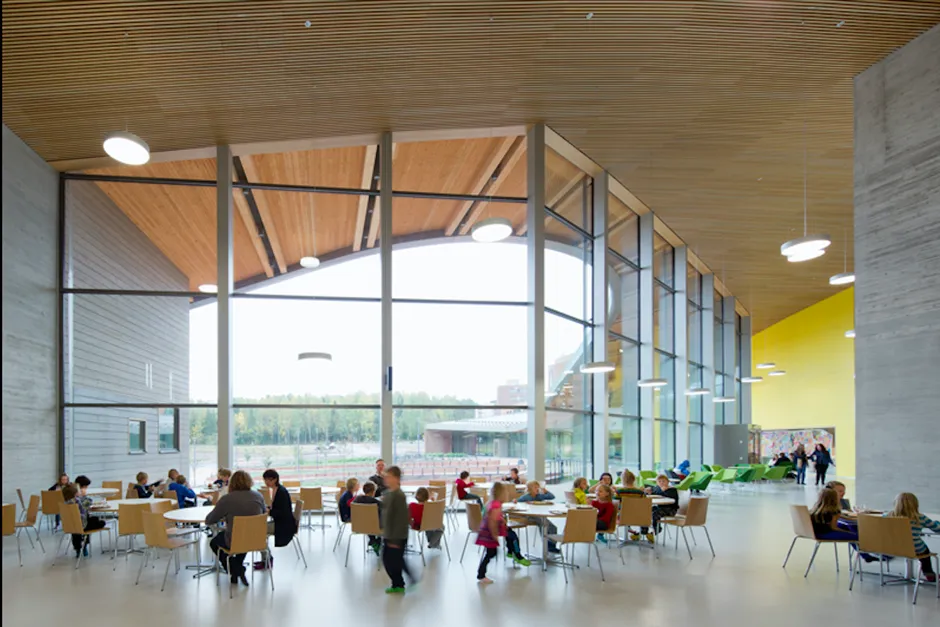

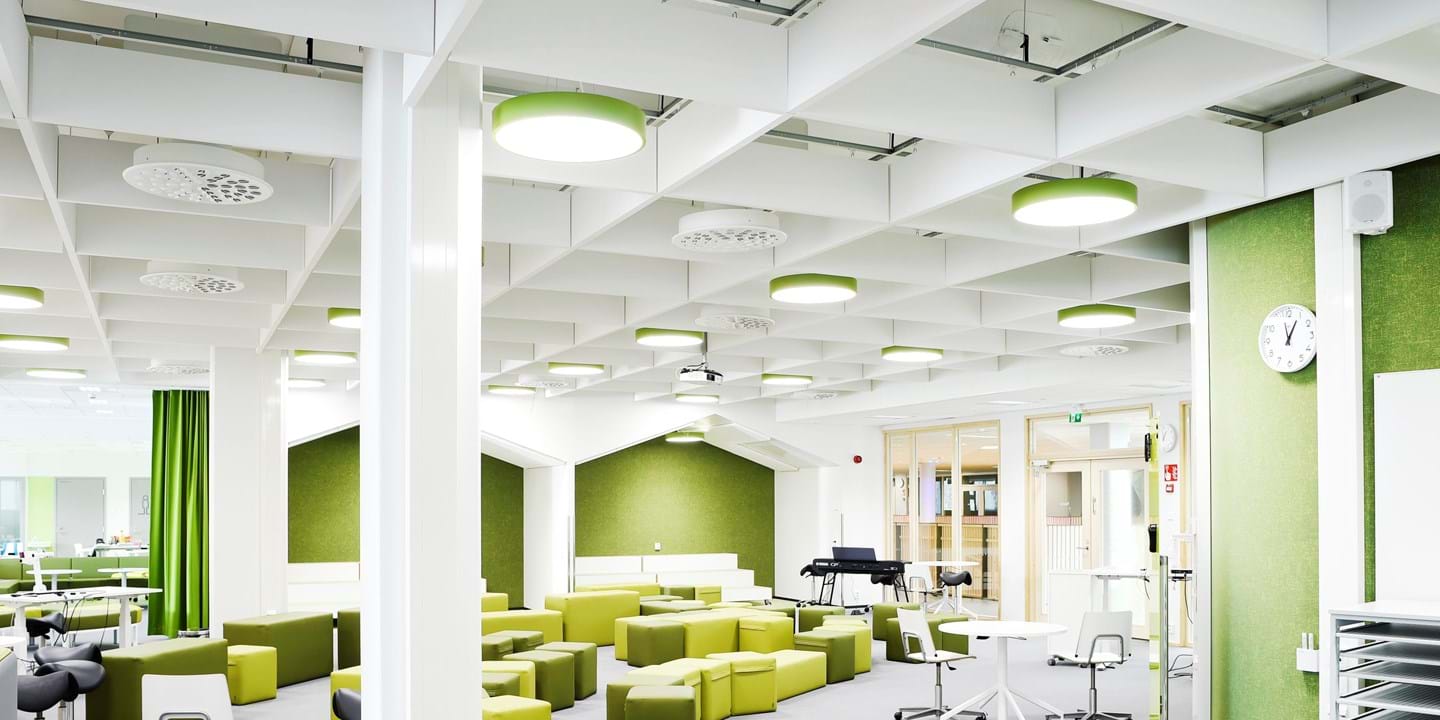
Finland designs schools around the nervous system of a child.
- Warm colors
- Natural light
- Flexible seating
- Quiet acoustic environments
- Reading corners
- Open “learning villages”
These reduce cortisol (stress hormone) by up to 40%.
A calm brain learns faster.
5. Teachers as Academic Elite
In Finland, becoming a teacher is harder than entering many medical programs.
- Only 10% of applicants are accepted
- All teachers must complete a 5-year research based master’s
- Teacher education programs include psychology, neuroscience and pedagogy
- No teacher works without autonomy
This is why Finnish schools need no heavy supervision — teachers meet the highest standards before entering a classroom.
6. Student Psychology: Zero Fear, Zero Pressure
Finland removes the psychological barriers that kill curiosity.
🇫🇮 No fear of failure
Mistakes are treated as part of the learning process.
🇫🇮 No comparison culture
Students are never ranked publicly.
🇫🇮 No toxic competition
The focus is mastery, not speed.
🇫🇮 No overloaded schedules
Children keep childhood.
As a result, Finnish students show the world’s highest levels of:
- Intrinsic motivation
- Reading enjoyment
- Emotional balance
7. Why a System Without Exams Still Wins
Countries ask:
“How can Finland do well without exams?”
The answer:
Finland measures depth, not memorization.
- Long-term projects
- Real-world tasks
- Problem-solving
- Teacher observation
- Group work
- Portfolios
Students learn how to think, not how to pass.
The “no exam until 16” principle removes fear and builds confidence.
8. Equality Inside the Classroom
Finland has an advanced three-tier support model:
- General Support
For all students as a base. - Intensified Support
For students who fall slightly behind. - Special Support
For students with long-term challenges.
Each classroom may also include:
- A special education teacher
- A teaching assistant
- A co-teaching model
This system ensures no child is left behind, regardless of ability.
9. Finland 2030: The Future School Vision
Finland’s next-generation education reforms include:
- Removing traditional subjects → phenomenon-based learning
- Strong AI-assisted learning tools
- Climate education integrated into all learning
- Digital well-being curriculum
- Multi-age learning groups
- Stronger socio-emotional learning (SEL)
Finland is not staying ahead — it is evolving ahead.
10. Comparative Insights
🇫🇮 Finland vs 🇺🇸 USA
- USA: Creativity & innovation
- Finland: Balance & equal opportunity
🇫🇮 Finland vs 🇯🇵 Japan
- Japan: Discipline, long hours
- Finland: Calm pace, deep learning
🇫🇮 Finland vs 🇰🇷 South Korea
- Korea: Intense academic pressure
- Finland: Minimal stress, maximum well-being
11. Who Thrives Best in the Finnish Model?
Children who are:
✔ Sensitive
✔ Creative
✔ Easily stressed
✔ Curious
✔ Independent thinkers
✔ Non-competitive
✔ Emotionally intuitive
… flourish exceptionally well.
Is Finnish education good for international students?
Yes, especially those who prefer balanced, non-competitive environments.
Why are Finnish schools so equal?
Because funding and teacher quality are uniformly distributed nationwide.
Can developing countries adopt the Finnish model?
Many principles (trust, teacher training, equity, calm spaces) are low-cost and adaptable.
For global scholarships, programs and education insights:
👉 https://oppotify.com
https://www.educationfinland.fi/sites/default/files/2019-11/finfo_education_in_finland_en.pdf